
Coffee starts its journey long before it reaches your cup. Every coffee bean begins as the seed of a fruit called a coffee cherry. These cherries grow on coffee plants in specific coffee growing regions around the world where the climate is just right.
Understanding where coffee comes from can help explain why coffees from different countries taste so different. From the mountains of Ethiopia to the farms of Colombia and Brazil, every growing region leaves its mark on the final cup.
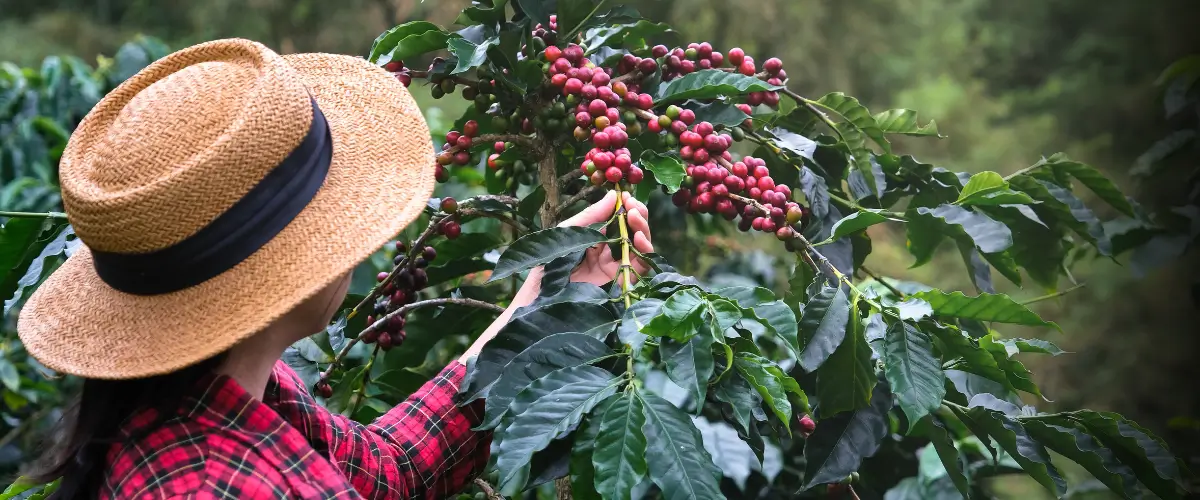
What Is a Coffee Plant?
Coffee comes from a tropical evergreen plant known as Coffea.
Farmers typically keep coffee plants trimmed to make harvesting easier and to encourage healthy growth.
A mature coffee plant produces:
- Dark green leaves
- Small white flowers
- Coffee cherries
Inside each coffee cherry are the seeds that eventually become coffee beans.
While most people think coffee begins as a bean, it actually starts as fruit growing on a living plant.
How Coffee Beans Become Coffee
After flowering, coffee plants produce cherries that slowly ripen over several months.
Once ripe, the cherries are harvested and processed to remove the fruit surrounding the seeds.
The seeds are then dried and prepared for export as green coffee.
Only after roasting do they become the coffee beans used to brew coffee around the world.
The journey from cherry to roasted bean is one of the many factors that influences flavor. If you’d like to learn more, explore our guide on How Coffee Is Harvested and Processed.
Coffee Growing Regions Around the World
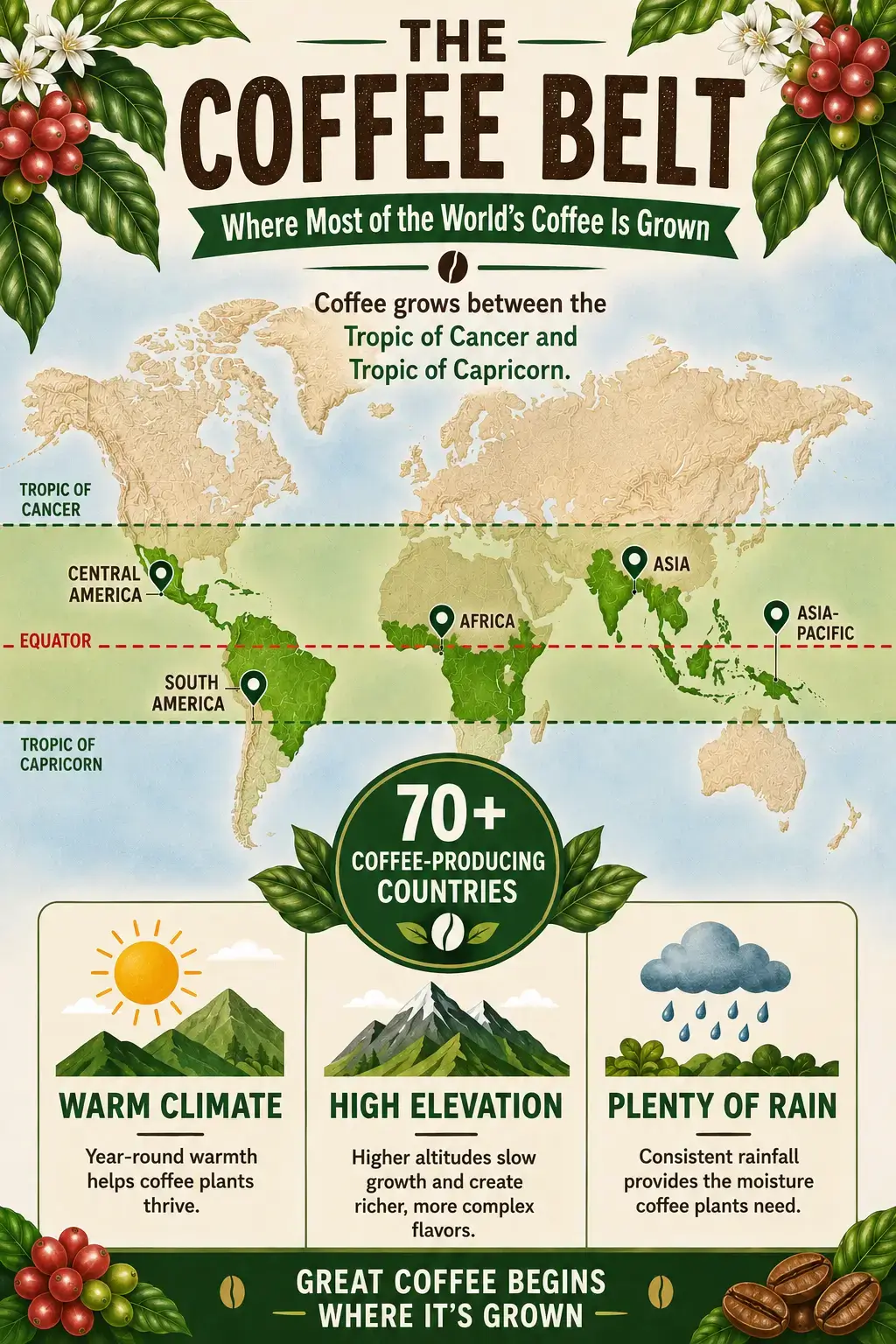
Coffee is grown in many countries, but most production takes place in a region known as the Coffee Belt.
The Coffee Belt wraps around the equator and provides the warm temperatures and consistent rainfall that coffee plants need to thrive.
Some of the world’s most famous coffee-producing countries include:
- Ethiopia
- Colombia
- Brazil
- Guatemala
- Costa Rica
- Indonesia
Each region produces coffee with its own unique flavor characteristics.
That’s why a coffee from Ethiopia can taste completely different from one grown in Brazil.
The Coffee Belt
Coffee plants can be picky.
They grow best in areas that provide:
- Warm temperatures
- Regular rainfall
- Rich soil
- Stable growing seasons
The Coffee Belt naturally provides these conditions, which is why the majority of the world’s coffee comes from countries located near the equator.
While coffee can occasionally be grown outside the Coffee Belt, the most consistent production happens within this region.
Arabica vs Robusta Coffee
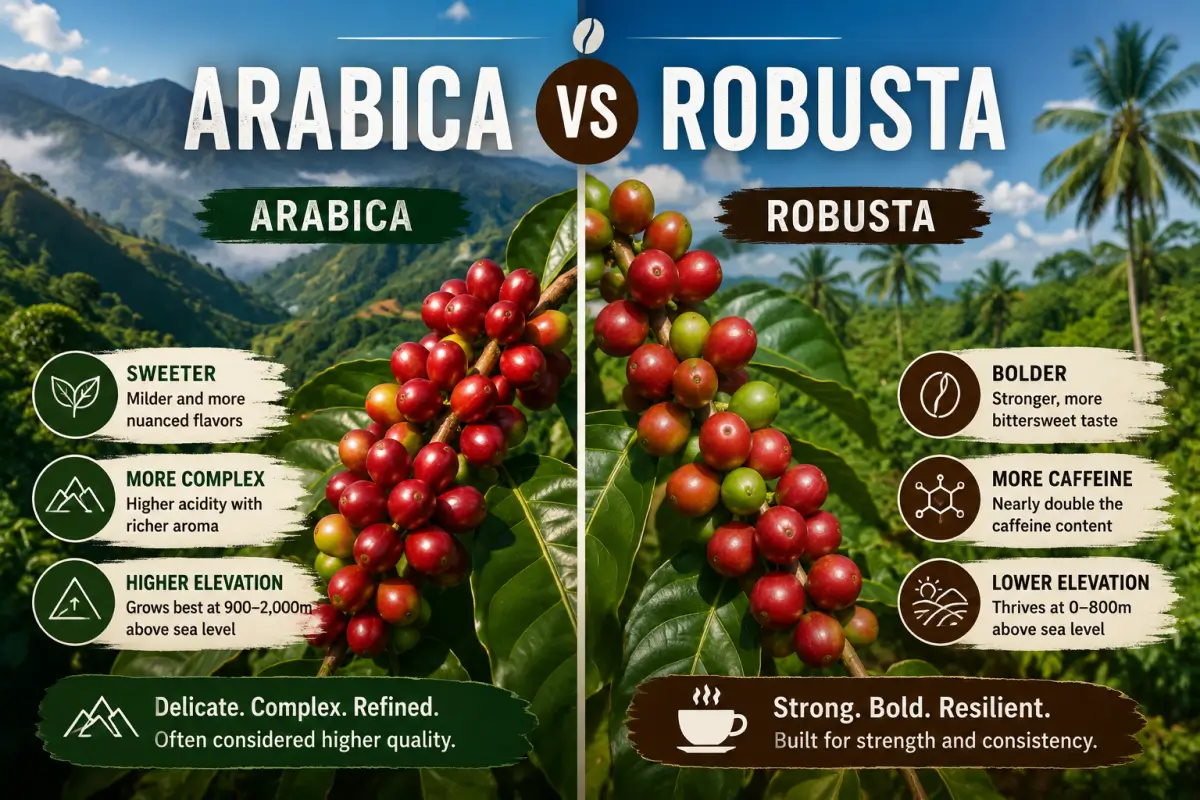
Most coffee sold around the world comes from one of two species: Arabica or Robusta.
Arabica Coffee
Arabica is the most popular coffee species and is responsible for most specialty coffee production.
- Sweeter flavor
- More complexity
- Fruit and floral notes
- Lower caffeine content
Robusta Coffee
Robusta is a hardier plant that grows well in warmer climates.
- Higher caffeine content
- Stronger flavor
- More bitterness
- Heavier body
Many espresso blends use Robusta to add strength and crema.
Because Arabica is typically associated with higher-quality coffee, it is the species most commonly used by specialty coffee roasters. Our article on What Is Specialty Coffee? takes a deeper look at what separates specialty coffee from commercial coffee.
How Elevation Affects Flavor
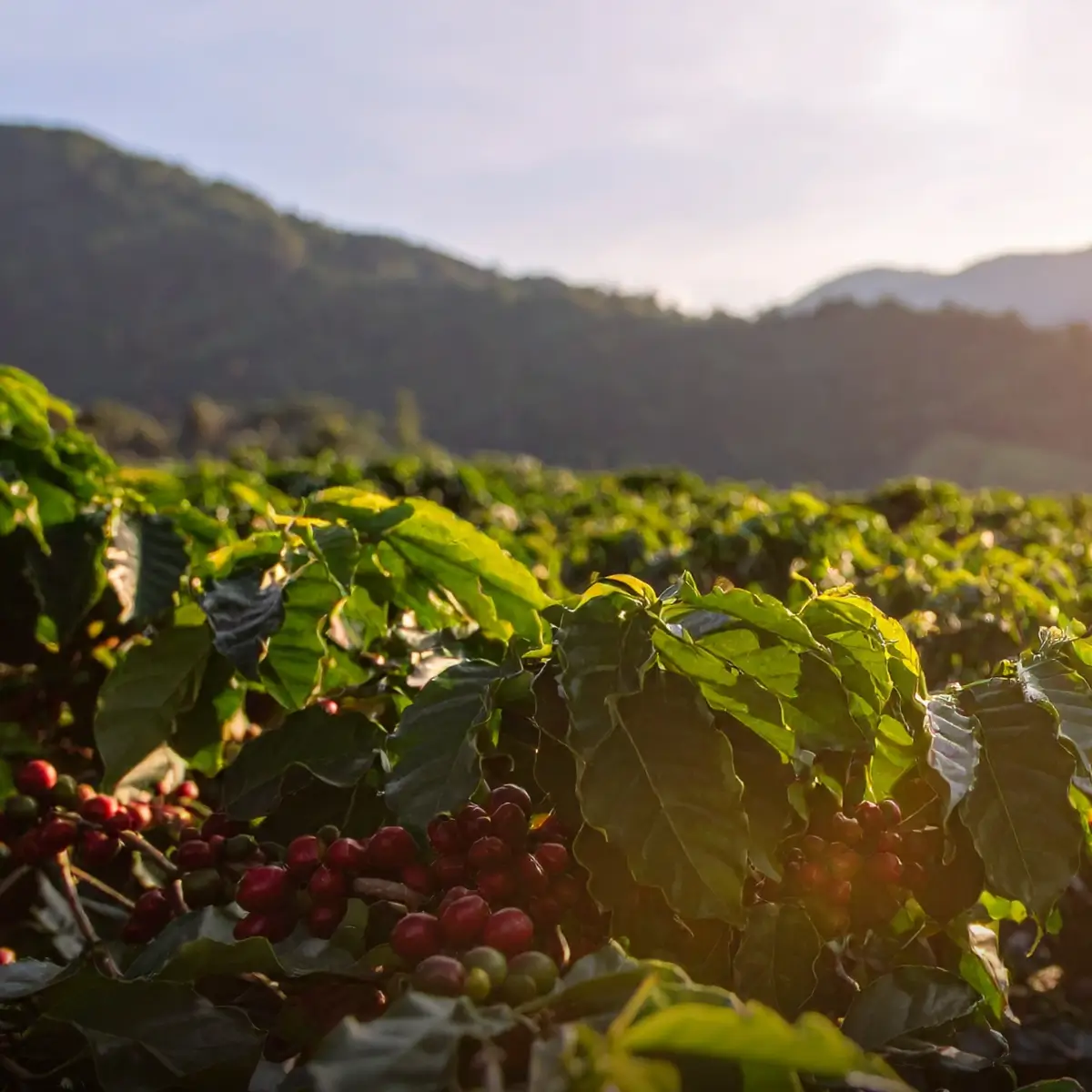
Not all coffee grows at the same elevation, and that can make a noticeable difference in the cup.
Coffee grown high in the mountains develops more slowly because of cooler temperatures.
That slower growth often produces denser beans and more complex flavors.
In general:
- Higher elevation coffees tend to be brighter and more complex.
- Lower elevation coffees often have a fuller body and more traditional coffee flavors.
Elevation is not the only factor that matters, but it plays an important role in how coffee develops.
Why Coffee Growing Regions Matter
Where coffee is grown influences flavor in ways many people do not realize.
- Climate
- Elevation
- Soil composition
- Growing conditions
- Processing methods
All of these factors work together to shape what you taste in the cup.
That is one reason coffee lovers enjoy exploring beans from different countries and regions. Even when roasted similarly, coffees from Ethiopia, Colombia, Brazil, and Indonesia can offer completely different experiences.
Coffee origin is just one piece of the puzzle. Brewing methods, roast profiles, and processing techniques all play a role as well. You can explore more of these topics throughout our Coffee Education articles.
Understanding the growing conditions behind each cup helps create a deeper appreciation for the people, farms, and regions behind every coffee.
Related Articles
What Is Specialty Coffee?
What is specialty coffee? A coffee that scores 80 points or higher on a 100-point scale established by the Specialty...
How Is Coffee Harvested and Processed?
How is coffee harvested and processed? Long before coffee is roasted, brewed, and enjoyed, it must pass through...
The History of Coffee: From Ancient Origins to Your Cup
Coffee has been bringing people together for centuries. Long before modern coffee shops, espresso machines, and...
Discover Coffee From Small Batch Roasters
Explore single origin coffee, espresso, blends, cold brew, decaf coffee, and subscriptions from small batch roasters across the country. Discover coffee from real people with real stories.
Shop Coffee
Explore coffee from small batch roasters, including single origin coffee, blends, decaf coffee, cold brew, and more.
Espresso Coffee
Discover espresso blends and single origin espresso coffees crafted for rich flavor, balanced extraction, and exceptional crema.
Coffee Subscriptions
Get fresh roasted coffee delivered automatically to your home, and discover new favorites from small batch roasters.
Browse Coffee Categories:
About the Author

Maker's Coffee
Blog Writer
Maker’s Coffee blog writers consist of experienced coffee professionals and enthusiasts dedicated to creating informative, educational, and engaging content about coffee, brewing methods, roasting, coffee equipment, and the people behind every cup.

0 Comments